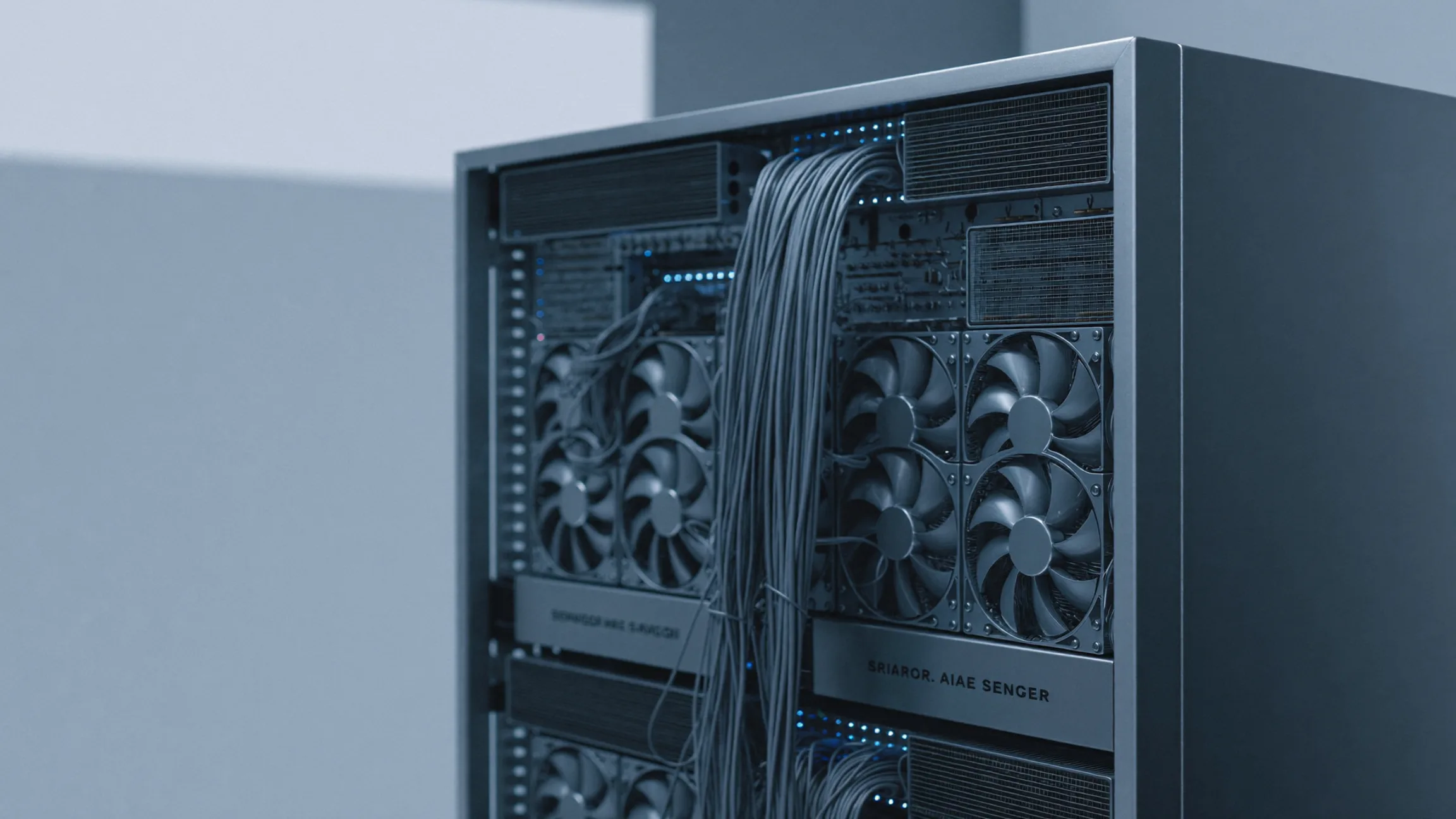
Your GPUs are not a truck, so we do not price them like one.
H100, H200, B200 and GB200 fleets appraised per unit, monitored by telemetry, and placed with lenders who already lend on compute. A higher advance because the lender can see the collateral.
The lender sets the advance, rate and term after the appraisal. Your report shows an indicative range. Pre-qualification is open now.
Eligible, and not. Stated before you send a serial list.
Eligible
H100, H200, B200, GB200
Data centre parts, SXM or PCIe, two years old or newer at close.
Under manufacturer warranty
Or an OEM extended warranty that can be assigned to the lender.
Serials on file
Every unit with a serial, an invoice and a node position in the schedule.
Owned outright or being bought
Including a purchase you are financing, with the lien taken at delivery.
A telemetry path
A DCGM or nvidia-smi exporter the monitor can read over HTTPS, read only.
Not eligible
Consumer cards
RTX and gaming parts, whatever the quantity.
Unserialised or mixed lots
No invoice, no serial, no borrowing base.
Leased from a hyperscaler
Or any unit where title sits with a third party.
Older than two years
Considered case by case at a lower advance, not in the standard programme.
No telemetry
If the monitor cannot see it, the lender cannot lend on it at the higher rate.
Orderly liquidation value, per unit, every quarter.
We appraise at orderly liquidation value per unit, not at invoice. The value comes from the resale book: closed trades on secondary compute markets, broker quotes and auction results for the same part, age and warranty state.
A residual curve for your model and age sets the value at every revaluation date, every quarter. The lender floor is the value a lender would recover in a 90 day sale. The advance is a share of OLV, so the gap between OLV and the floor is the lender's cushion, and the reason they lend higher.
Per GPU readout
Illustrative
Illustrative. H100 SXM 80 GB, under warranty. Not a quote.
What we monitor, and why it raises your advance.
Utilisation, location, firmware, temperature, power, ECC errors and last ping per GPU, monthly, from your DCGM or nvidia-smi exporter. The lender sees the fleet is running where it should, so they lend against a running fleet, not an audit from last year.
Utilisation
Trailing 30 day average per unit.
Location
Node and site match the registered schedule.
Firmware and driver version
No silent downgrade or unauthorised flash.
Temperature and power draw
Thermal stress shortens residual life.
ECC memory errors
Early sign of a failing part.
Last ping
A unit that goes quiet is a unit that may have moved.
What a breach does
A covenant trips, for example utilisation stays under the floor, or a unit leaves the registered site. You and the lender get the same notice, the same day. Then a cure period: bring the metric back, move the unit back, or substitute an eligible unit. If it is not cured, the borrowing base is recomputed on the remaining eligible units. It is designed to end in a partial paydown, not a default.
Every document, one room, versioned.
This is the GPU document set. Every document in one room, versioned. The data room is coming.
Borrowing base certificate
Eligible units, OLV, advance, facility. Recomputed every quarter.
Compliance certificate
Covenant status from the monitor, signed by you each month.
Insurance certificate request
Sent to your broker. Lender named as loss payee.
Serial list
Model, serial, node, site, invoice date. The schedule to the security agreement.
ACORD 25
Certificate of liability insurance, returned by your broker.
Lien search
UCC search in your state of organisation before filing.
Appraisal summary
IllustrativeIllustrative. No GPU loan has closed yet. The lender sets the advance, rate, term and fees.
The risk profile a lender reads first.
The GPU register at Safewaterline Intelligence tracks resale values, residual curves and lien activity for data centre GPUs. It is the book our appraisals draw on, and the risk profile a lender reads before they look at your fleet.
My GPUs are in a colocation facility. Does that matter?
No. The lien is on the units, not the building. We register the site, the colo signs a landlord waiver so the lender can access the units if it comes to that, and the monitor reads the exporter wherever the racks sit.
What about GPUs we are still paying the vendor for?
If you are financing a purchase, the lien is taken at delivery and the loan can fund the purchase. If a vendor already holds a lien, we work on a payoff or an intercreditor agreement.
Does monitoring slow the cluster or see the workload?
Neither. It reads DCGM metrics over HTTPS, read only, at a cadence you set. It never sees jobs, data or customers. Only you and your lender see the metrics.
We have venture debt with a blanket lien.
Common. We work with your venture lender on a carve out for the GPUs. Venture lenders often agree, because the carve out brings in capital without diluting their position. See For startups.
What happens at revaluation if H100 prices fall?
The borrowing base is recomputed on the new OLV. If it falls under the facility, you have a cure period to pay down the gap or add eligible units. The residual curve is published, so the number is not a surprise.
Send the serial list. The appraisal report is yours either way.
Pre-qualification is open now. Nothing is owed until a loan closes.